
At Exemplar Health Care, we know the environment someone lives in can significantly influence wellbeing, safety, and outcomes for people living with dementia.
As the number of people living with dementia and related complexity continues to rise, so does the need for care services that can meet complex needs and support stable, sustainable placements.
Springfield Vale, our specialist dementia nursing home in Barnsley, was designed to support people living with complex dementia through an evidence-based environment and nurse-led care.
We spoke with our Commissioning and Operations Development Director, Charlotte Lloyd, about the design decisions behind Springfield Vale and how specialist environments can support safer care, reduced distress, and more stable long-term placements for people living with dementia.
Why did Exemplar Health Care develop a specialist dementia nursing home?
We developed Springfield Vale in response to a growing gap in the health and care system for people living with complex dementia.
Increasingly, we’re supporting adults whose needs go beyond what traditional care settings are set up to manage.
Many of the people referred to us have experienced multiple failed placements, extended hospital stays, or repeated admissions - partly because the right environment hasn’t been available.
"Springfield Vale was developed to provide a stable, supportive home for people whose needs are often described as “too complex” elsewhere."
The design of the home plays an important role in this.
That’s why we worked with the University of Stirling’s Dementia Services Development Centre (DSDC) to embed evidence-based design principles that enable, rather than hinder, good care.
How does the design support people living with dementia?
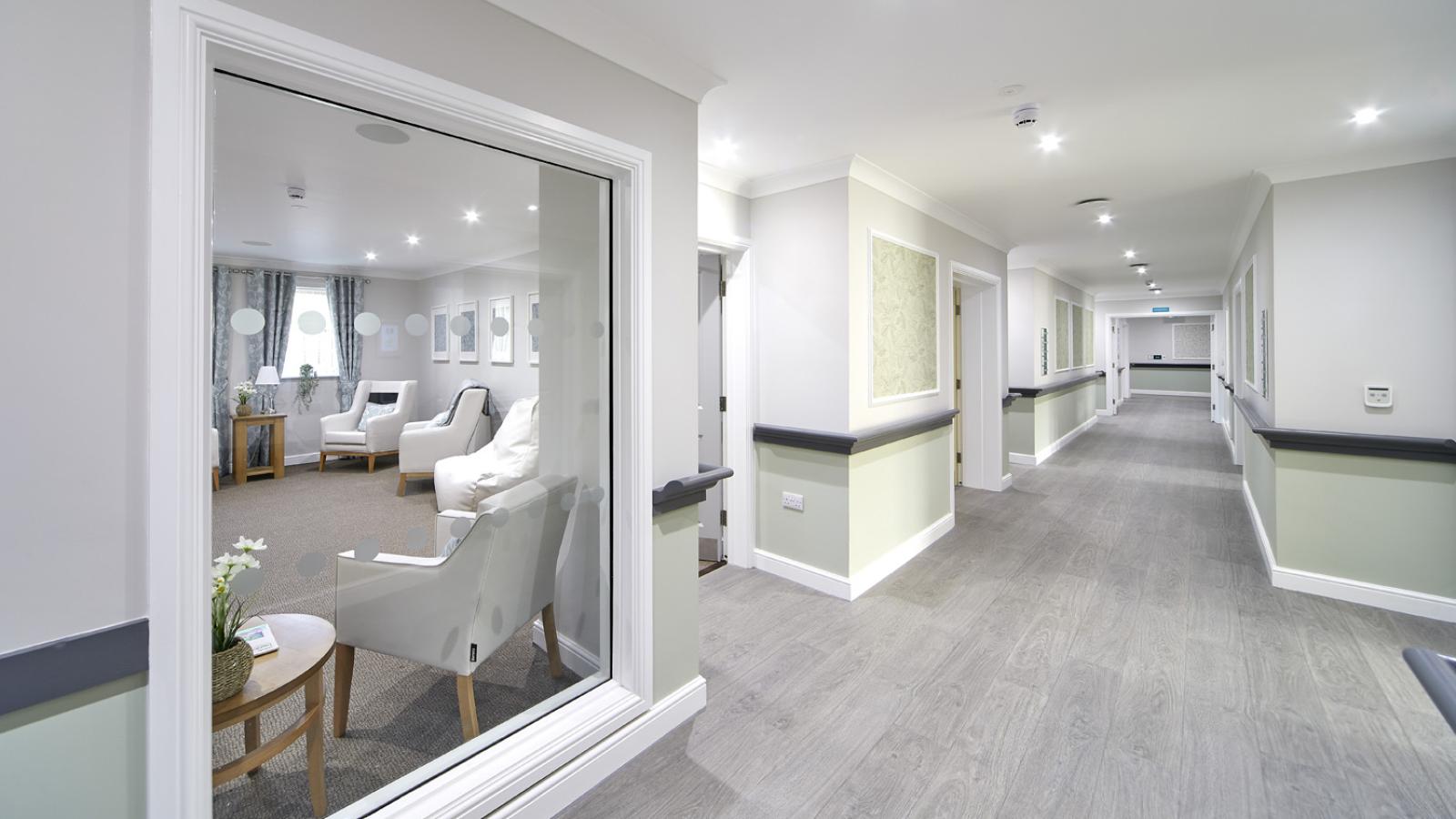
Springfield Vale follows evidence-based dementia design principles. Key features include:
small, homely communities of 11 residents to reduce noise and overstimulation, and support familiarity and predictability
colour and contrast design based on Light Reflectance Values (LRVs), to support depth perception and help reduce falls
circadian lighting systems that mimic natural daylight patterns, to support better sleep, reduce agitation, and promote a healthier day-night rhythm
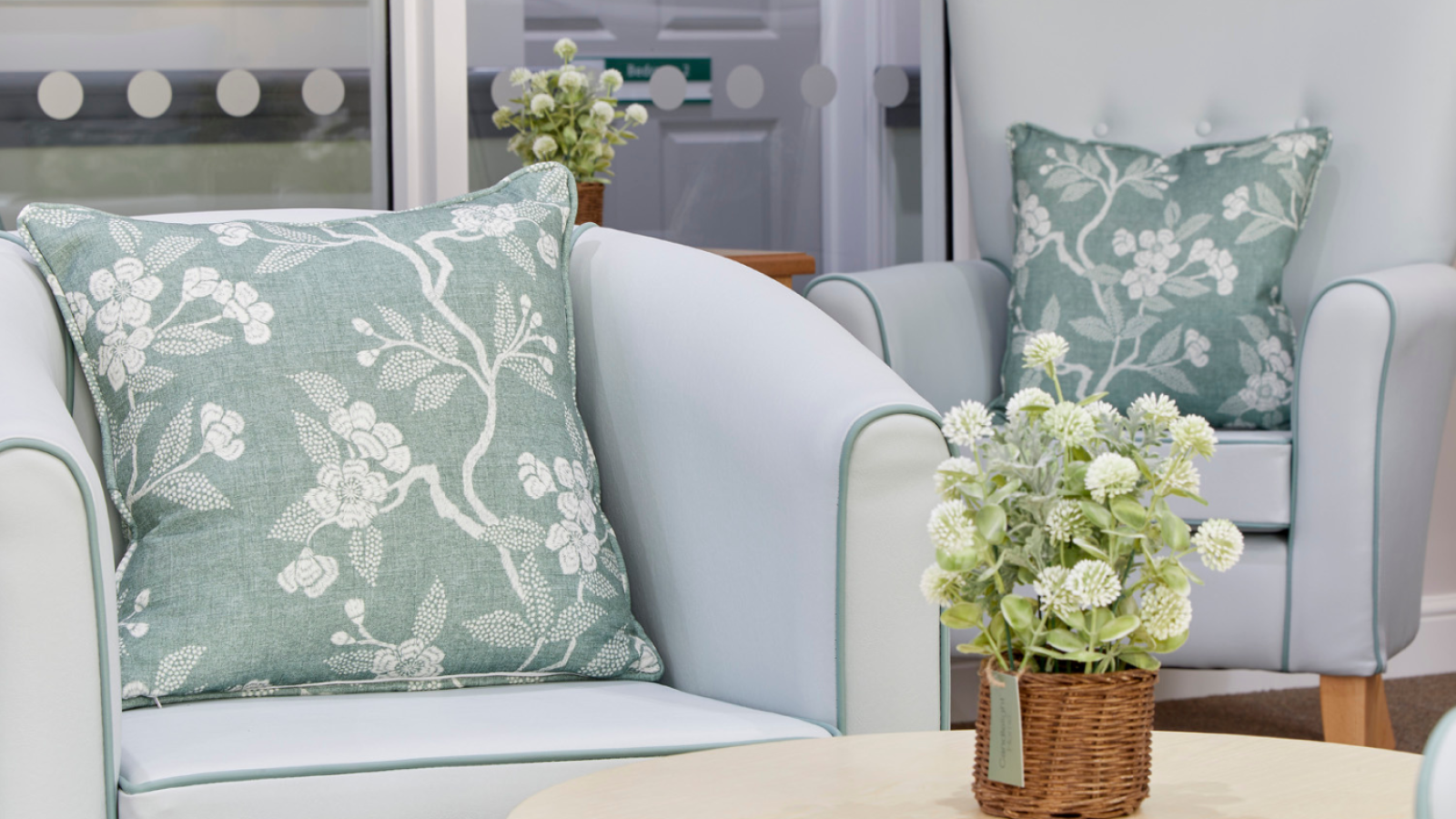
safe, familiar décor with neutral themes, calming tones, and local references to reduce anxiety and create a homely feel
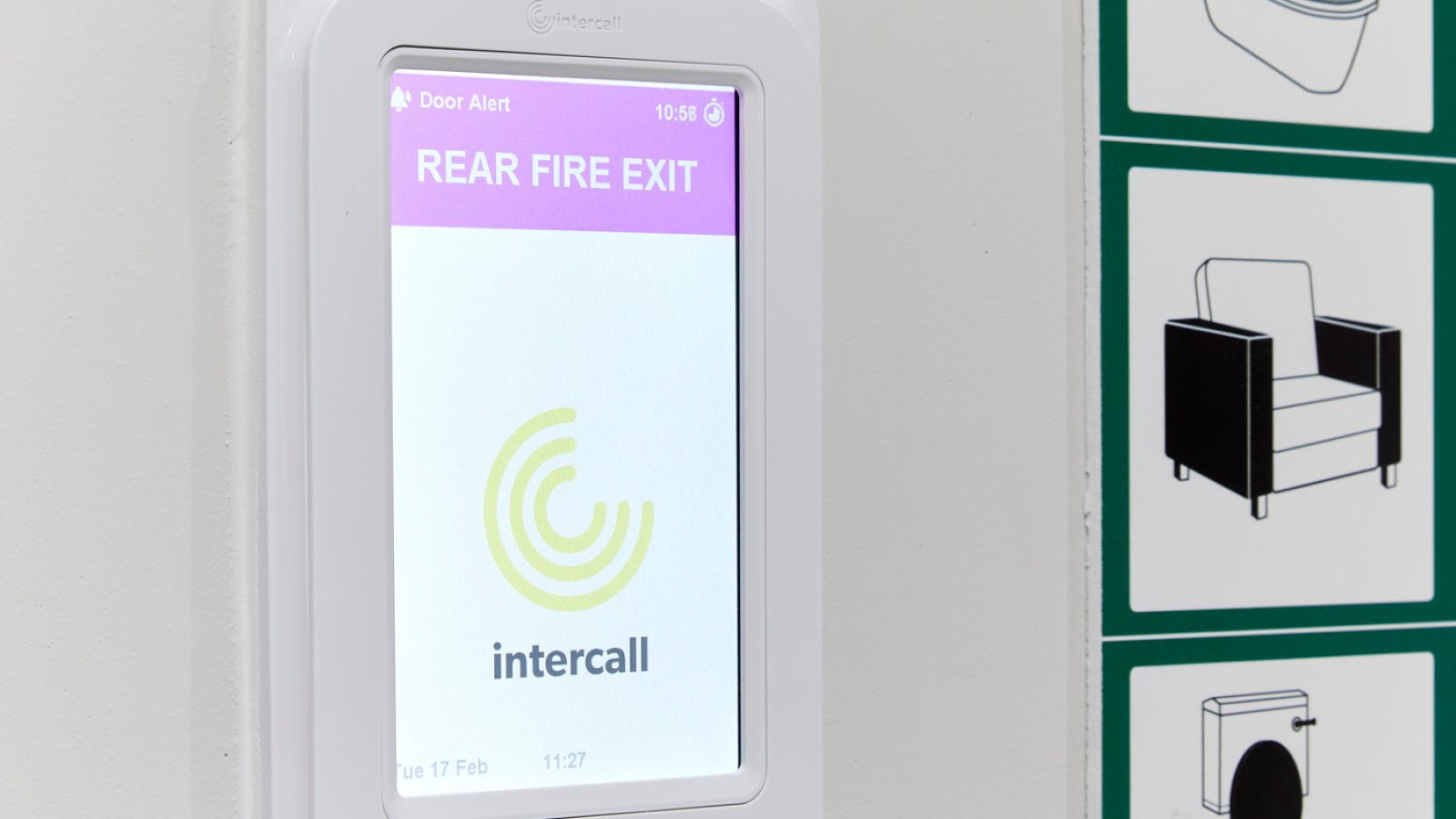
technology-enabled care, including discreet monitoring sensors and silent nurse call systems, to reduce intrusive noise.
Together, these features support orientation, reduce distress triggers, and help people navigate the environment more independently.

Which features support orientation and wayfinding?
Springfield Vale is designed to improve safety and confidence when wayfinding through multiple integrated features. These include:
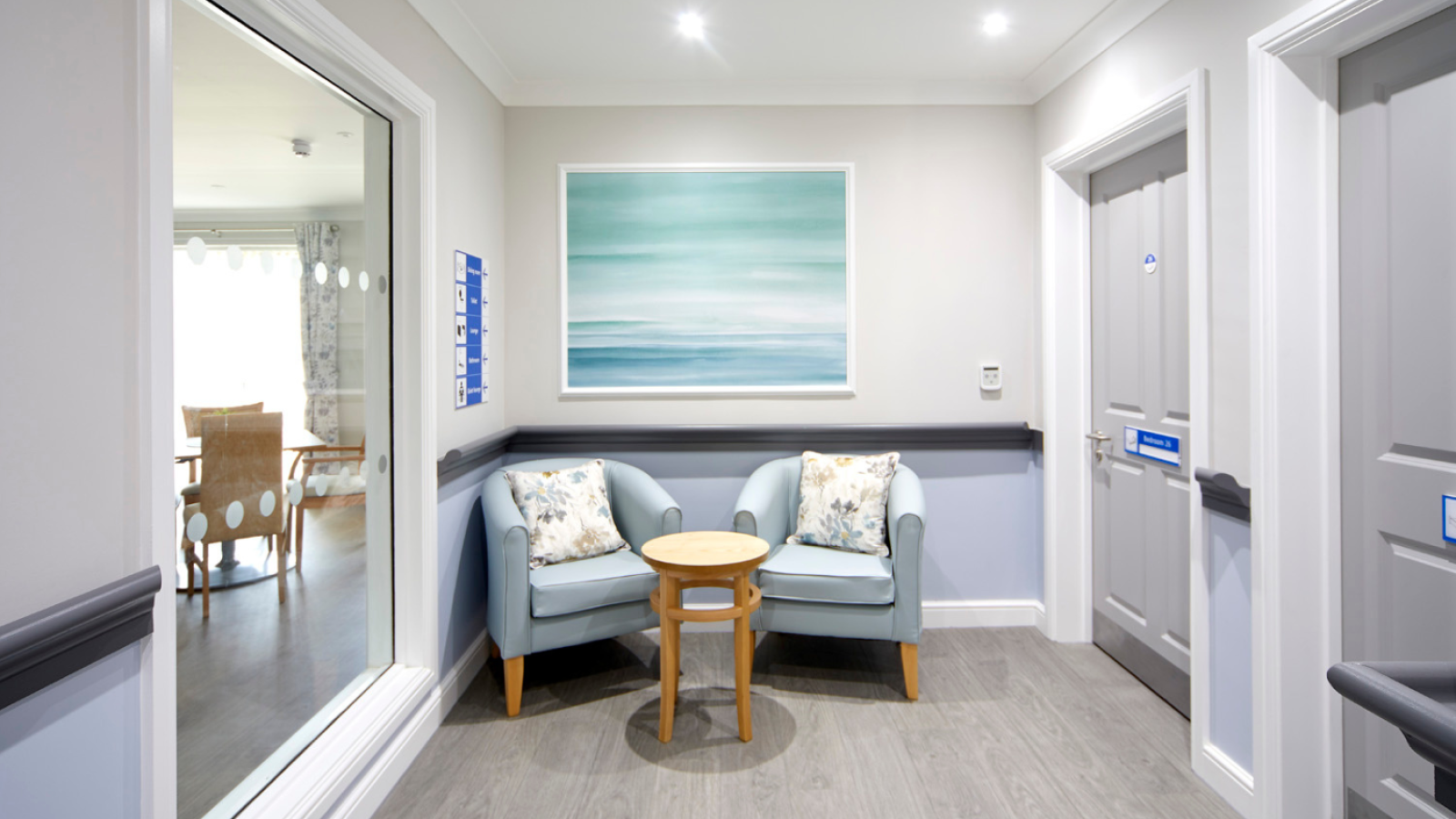
clear, simple layouts with direct sightlines and logical room placement, to reduce confusion and support wayfinding
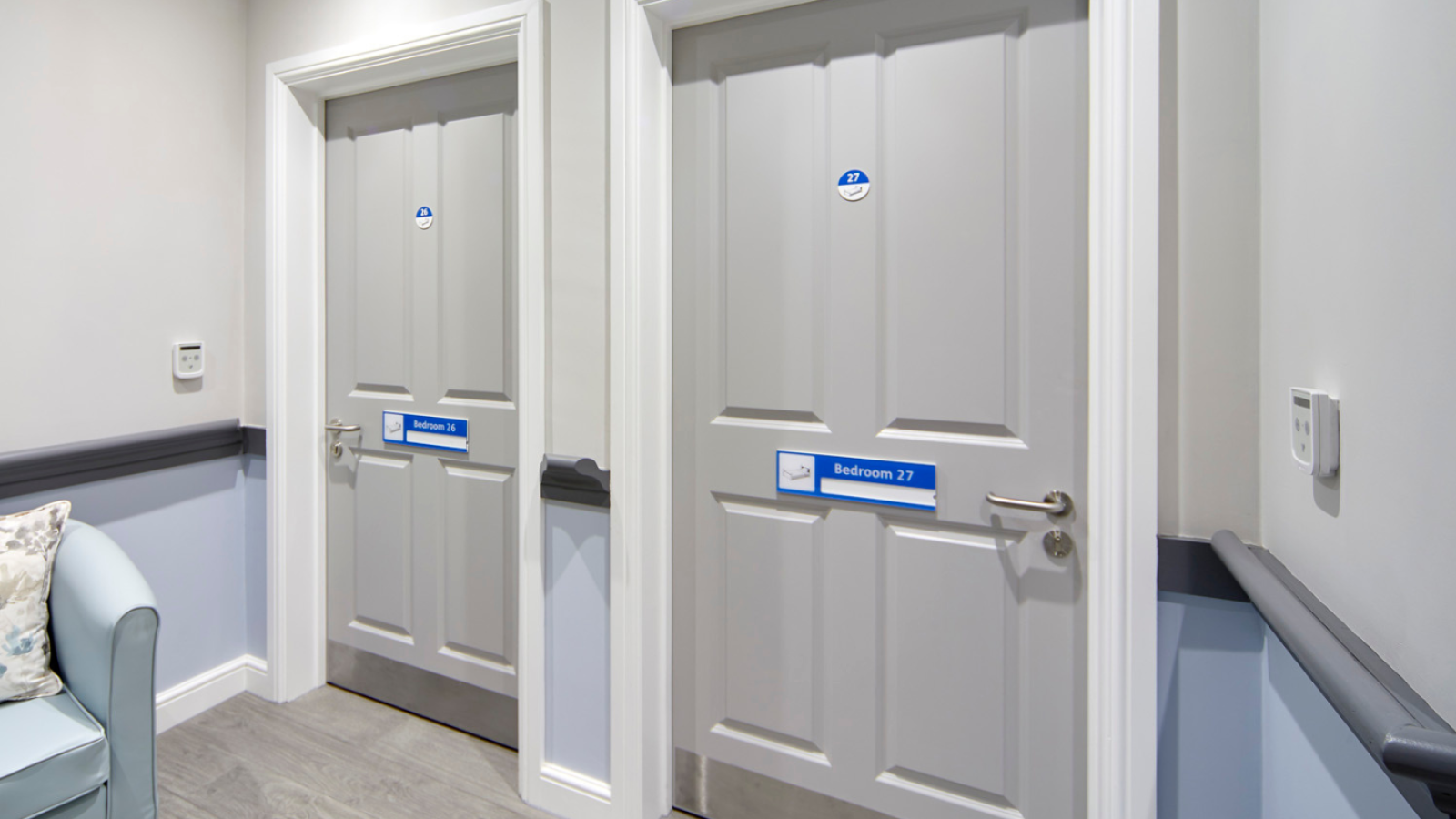
recessed, personalised bedroom entrances to help people recognise their own space
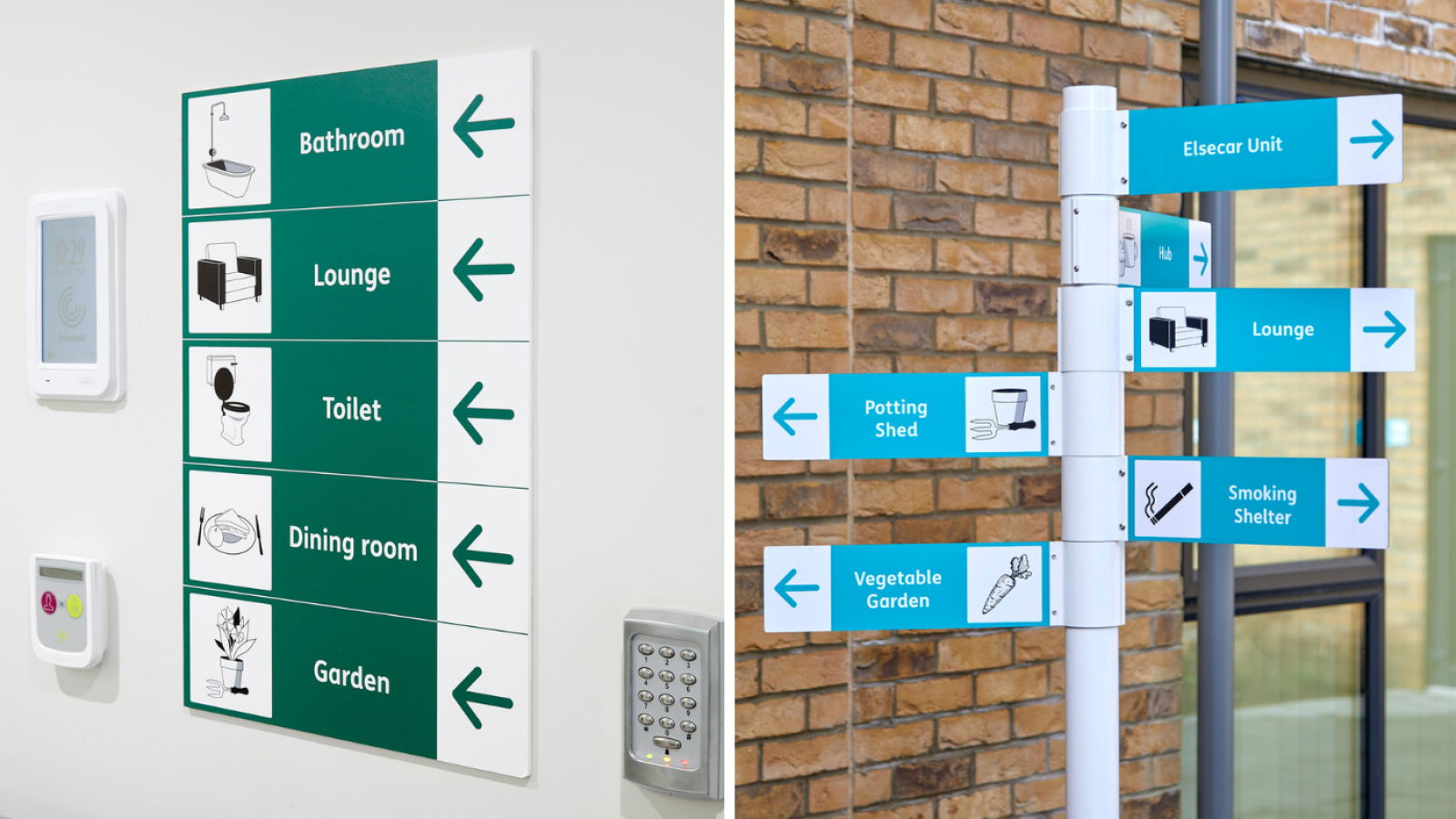
dementia-sensitive signage using icons, strong tonal contrast, and plain language, to make navigation easier
consistent colour palettes and visual landmarks throughout corridors to help people feel more oriented
non-glare, matte flooring and consistent transitions to prevent misinterpretation and makes spaces feel safer and easier to navigate.
These decisions help create an environment that feels predictable and reassuring.
How do you avoid an institutional feel while maintaining a safe clinical environment?
We prioritised a familiar environment alongside robust safety and accessibility. This includes:
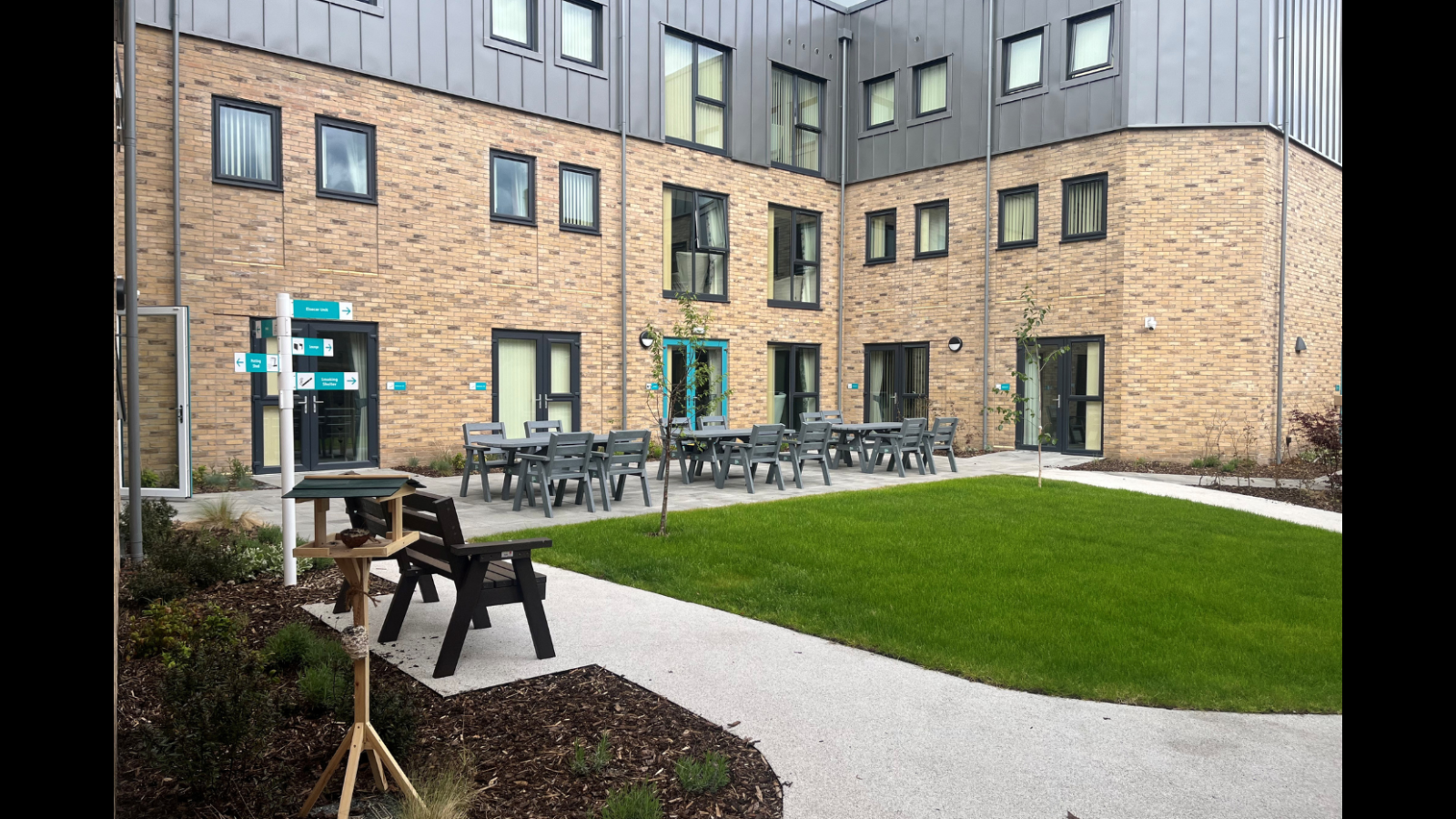
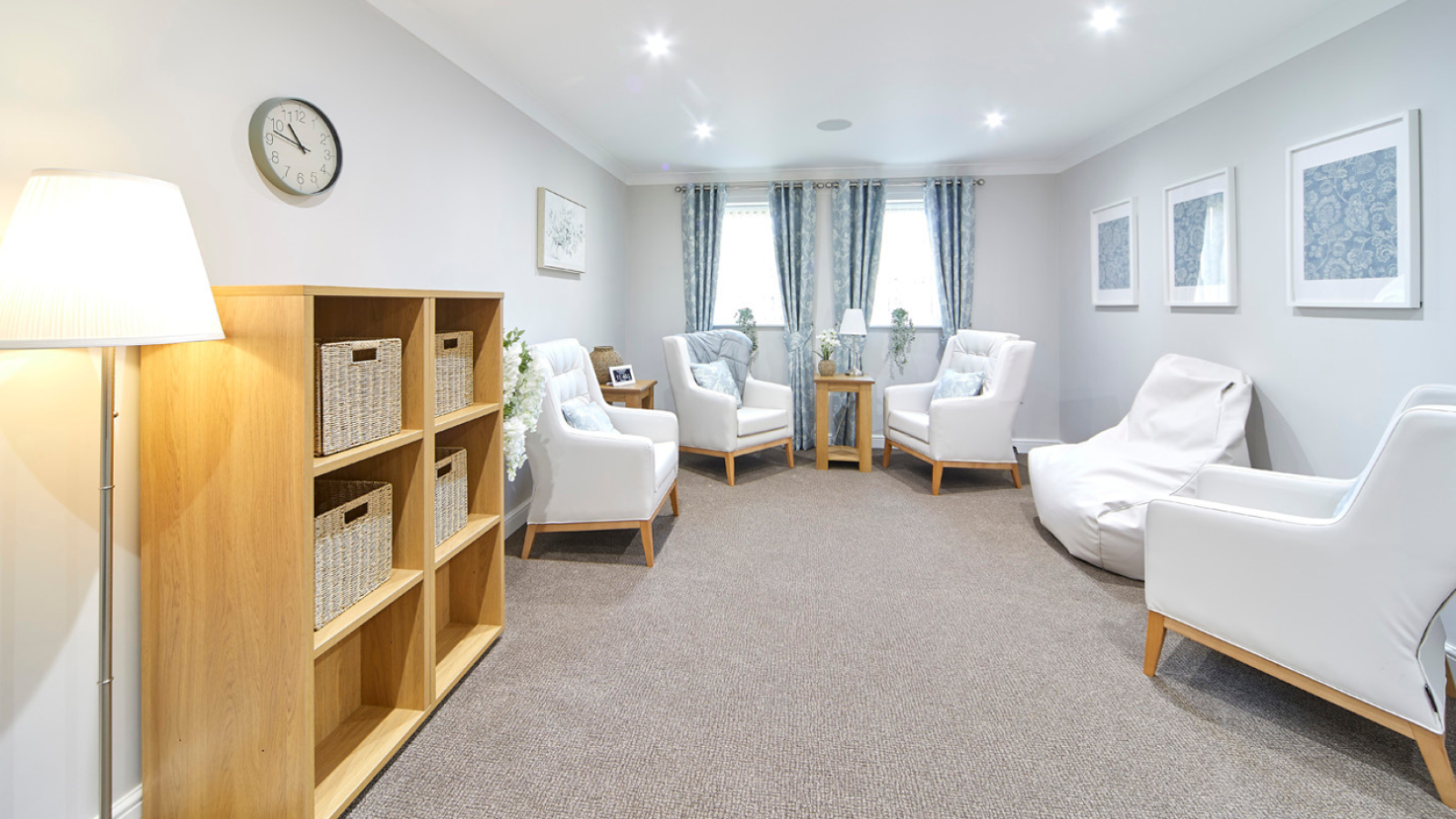
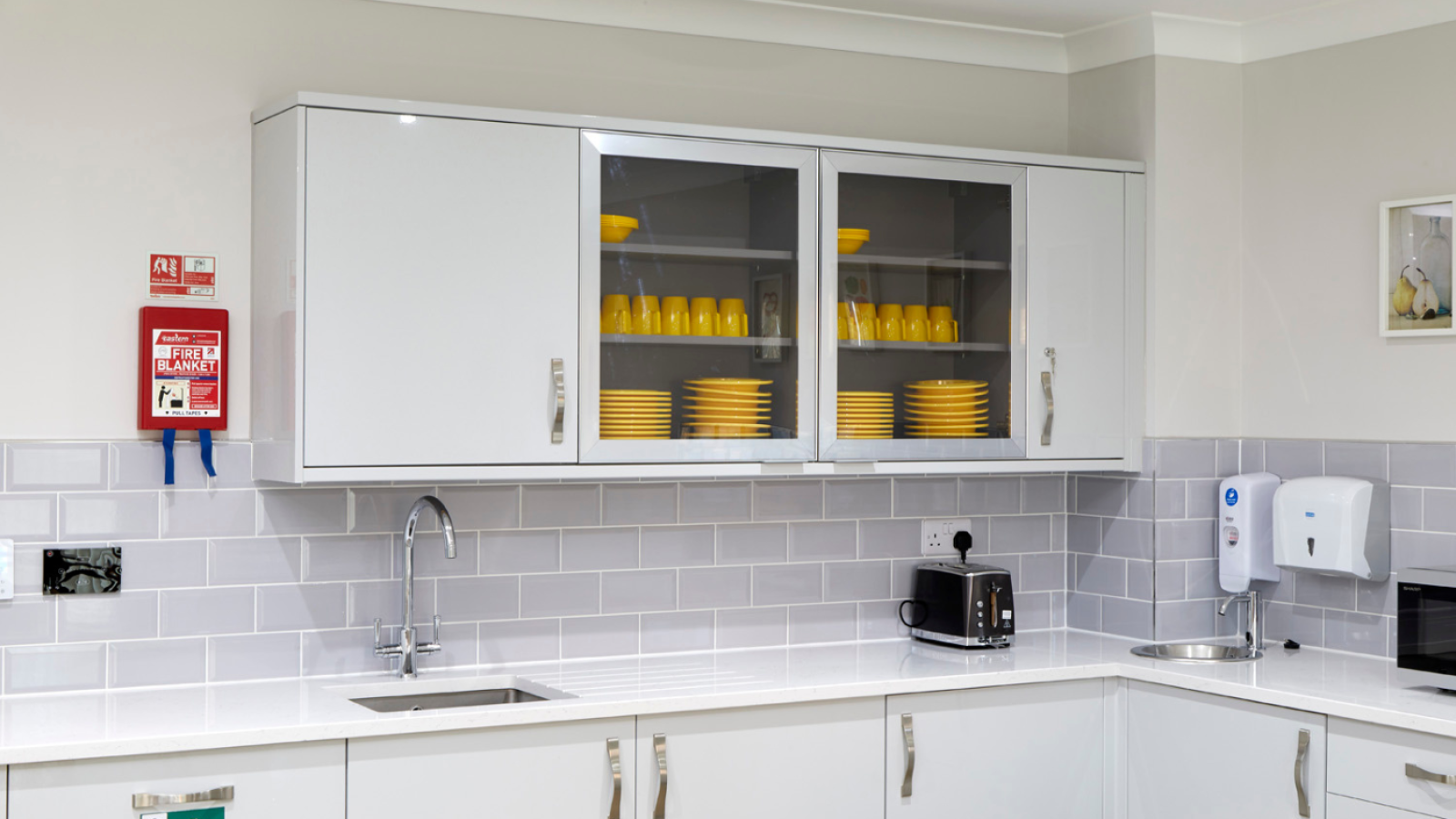
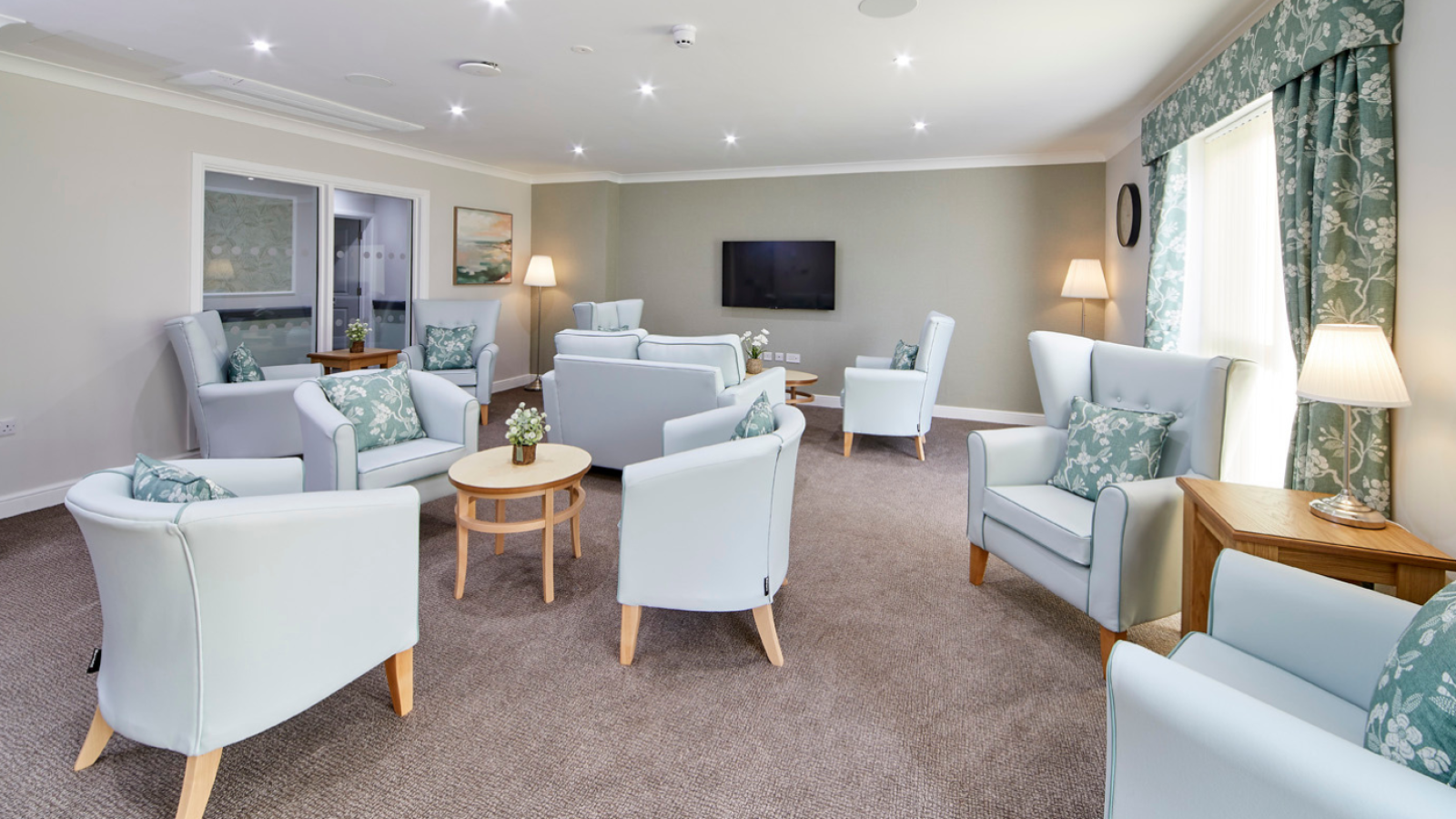
small communities, each with its own lounge, quiet room, and dining area with kitchenette to help people feel part of a household rather than a unit
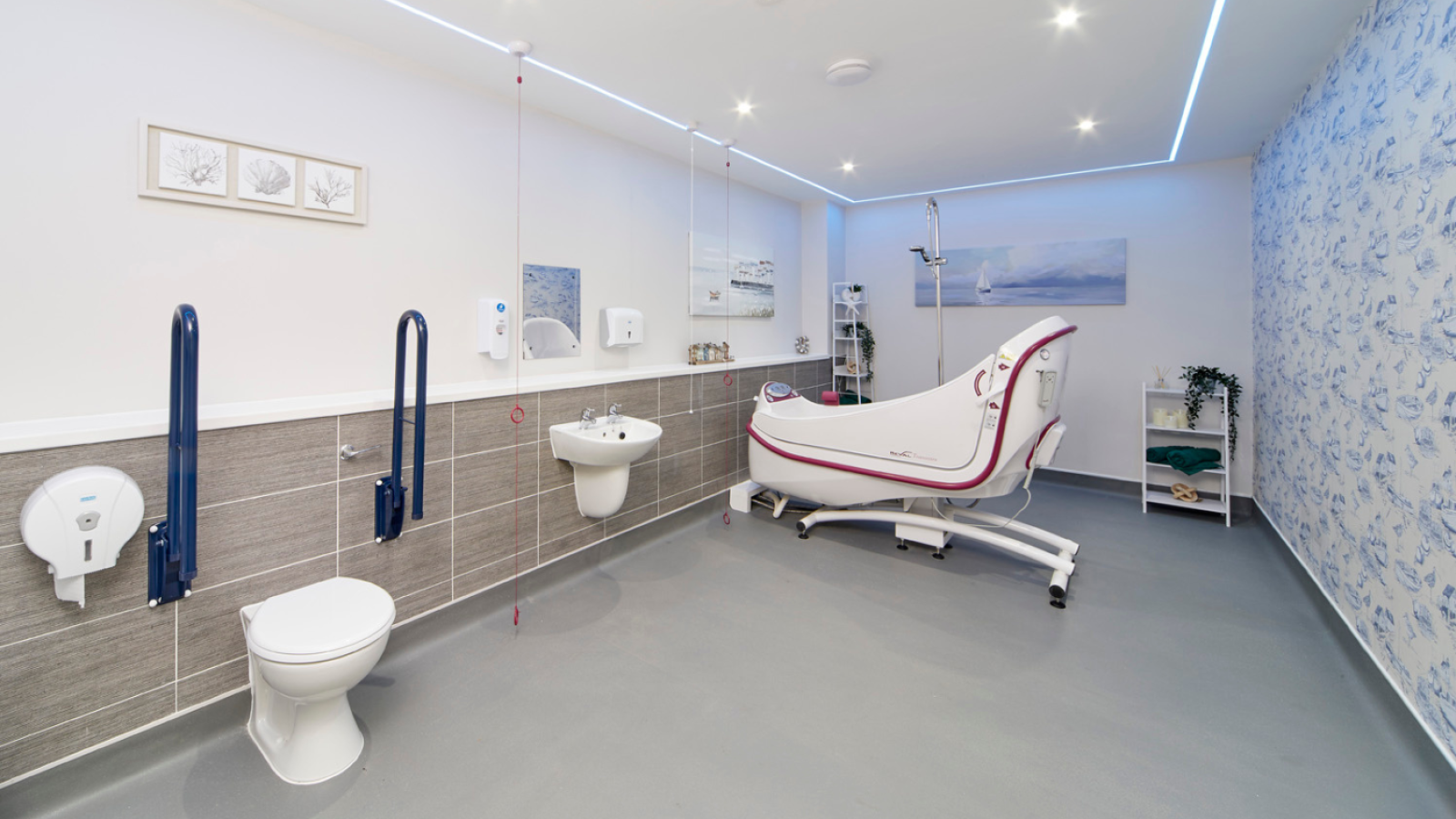
spa-like bathrooms with mood lighting and optional music, rather than clinical fixtures
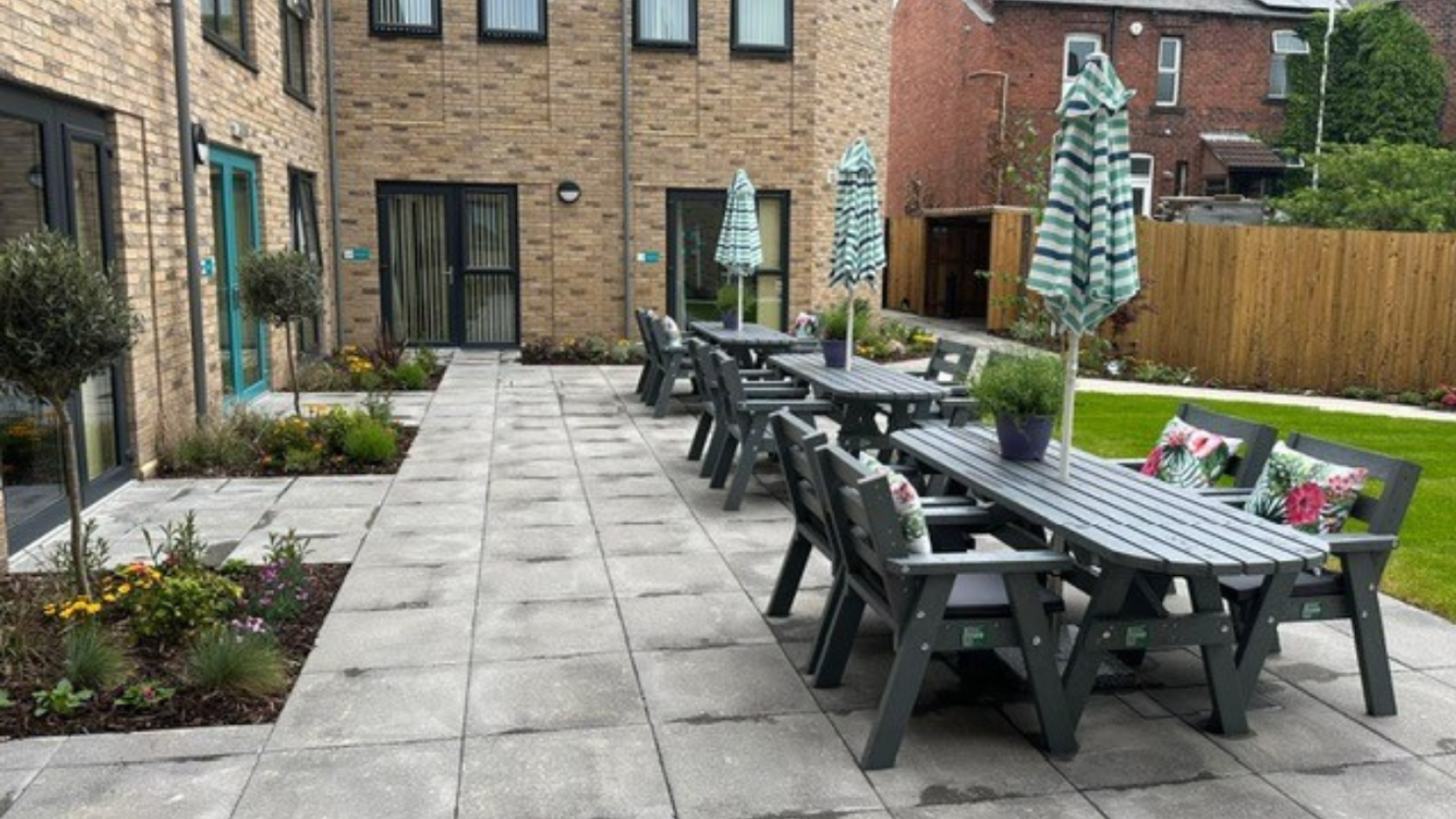
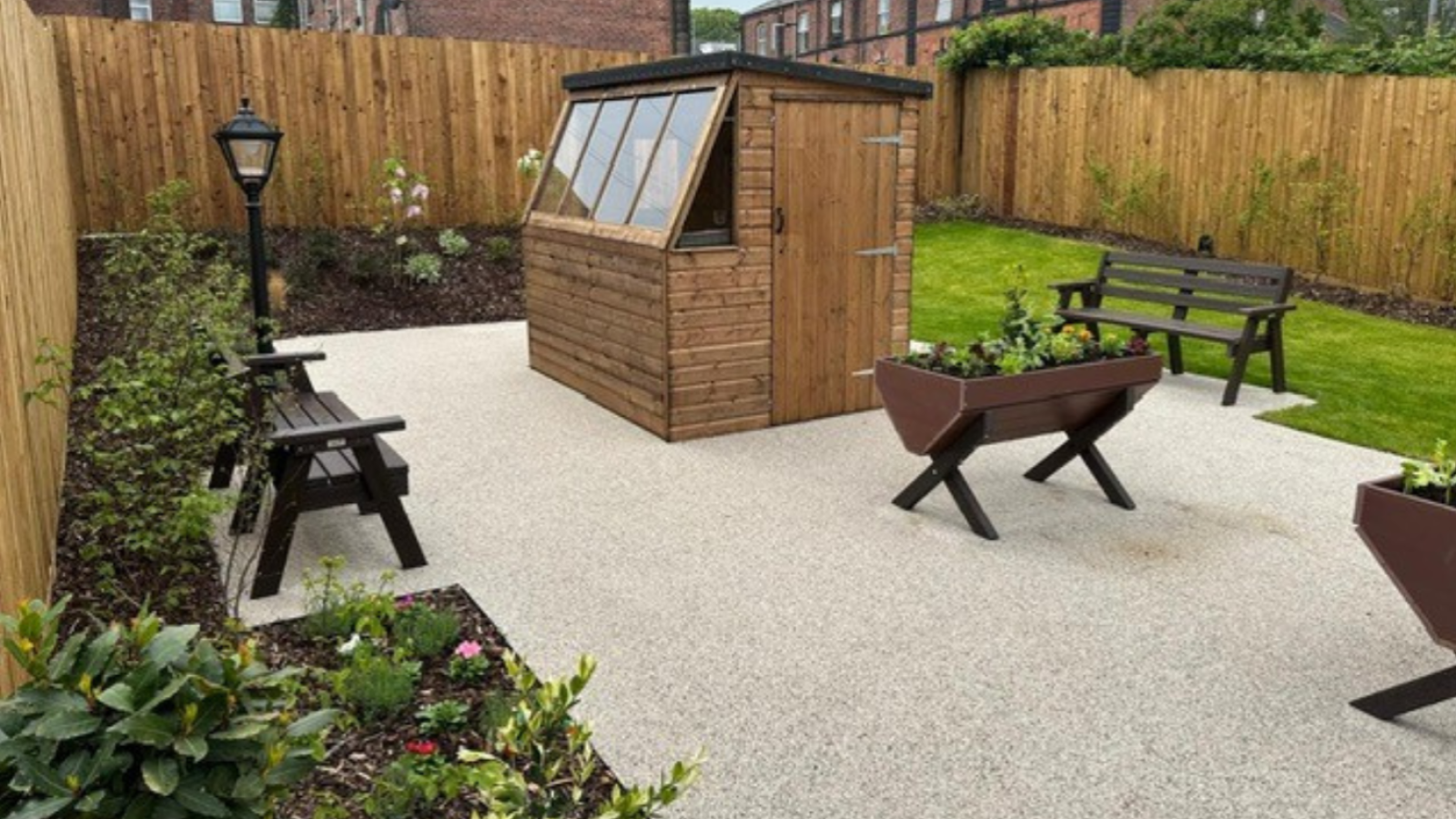
secure, accessible gardens with looped pathways, sensory planting, and safe boundaries to promote freedom and independence without increasing risk
warm, familiar décor with neutral textures and soft furnishings, rather than clinical finishes
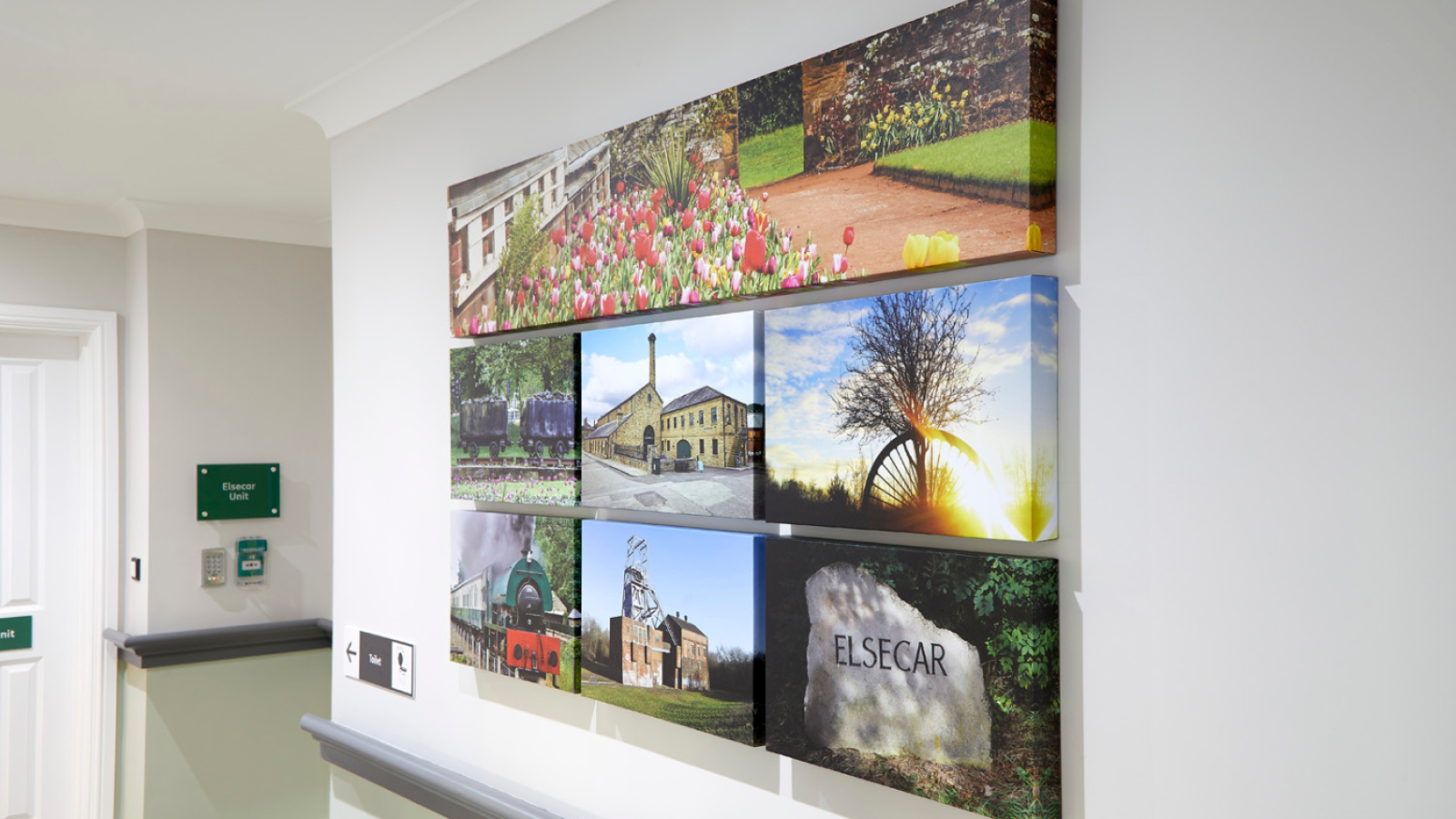
meaningful artwork and local references that support connection and familiarity
open shelving and viewing panels in key areas, so people can see into spaces and recognise everyday items to support independence
varied seating styles to create a lived-in feel and offer choice.
This approach supports comfort and familiarity, while maintaining the facilities and clinical oversight needed for complex dementia nursing care.
How do you hope this environment will benefit the people living in the home?
Evidence shows that well-designed dementia environments can increase independence, reduce distress-related behaviours, support safer mobility, and improve quality of life.
The environment at Springfield Vale was designed to support numerous positive outcomes for people, including:
greater freedom and confidence
more meaningful engagement
better sleep and improved day-night routine
a stronger sense of familiarity and belonging.
By combining a dementia-supportive environment with nurse-led care, we aim to reduce the triggers that can lead to distress, escalation, and avoidable transfers - providing more stable and sustainable placements for people living with dementia.
Most importantly, we want Springfield Vale to support people living with dementia to live well in a setting that meets their needs, and to give families and professionals confidence in the placement.


Explore care homes across England for adults with complex needs.
Get in touch to discuss a complex care placement for someone you support.
Explore rewarding roles with training, support, and chances to grow.
Reach out with questions about care placements, jobs, or general enquiries.